Wellbore cleanout

The tools that clean the pipe before the next operation.

7" and 9-5/8" non-rotating brushes and scrapers, junk catchers, string magnets, vacuum tools, and circulation tools — sourced, prepared, and run as a clean-up string.

How the string is built

Scrape and brush the wall. Catch the junk. Magnet the metal. Vacuum what will not circulate.

A typical clean-up BHA spaces a scraper and brush below a junk catcher, with a string magnet and a circulation tool where hole conditions need more flow or ferrous recovery. The vacuum tool is added when debris sits on a plug, a formation-isolation valve, or a damaged interval and will not come out with circulation alone.

Casing tools

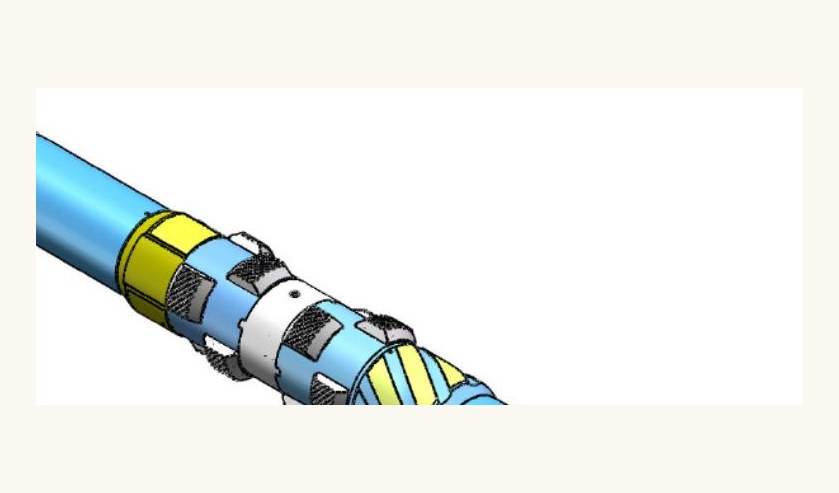
Non-rotating casing scraper

Non-rotating casing scraper

Removes residual cement on the casing wall, mud and tie-in burrs, perforation debris, rust, scale, and hard paraffin. The tool is a mandrel, cutter blocks, spring plates, and screws. Non-rotating mode protects casing when the string is rotated. Relocate a shear ring to dress the tool in rotating mode. Blades hold 360° contact with the casing ID.

  • 9-5/8" NC50 box × pin · 71.26" long · working OD 8.175"–9.06"
  • 7" NC38 box × pin · 70" body · working OD 5.82"–6.61"
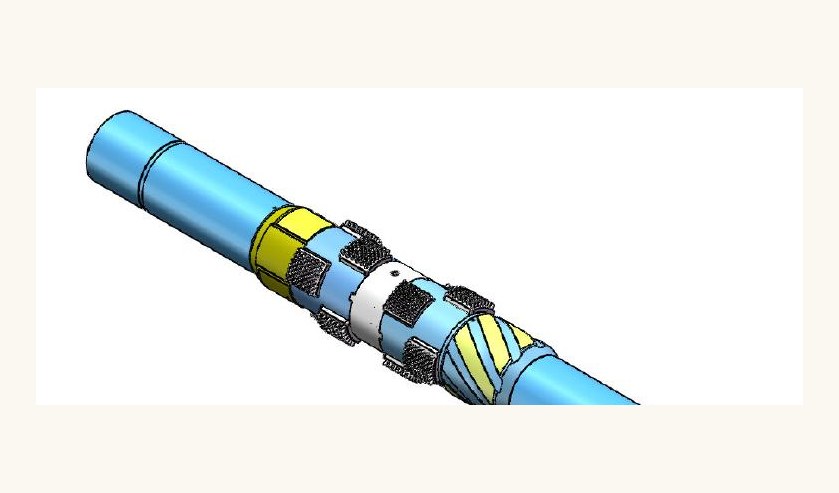
Non-rotating casing brush

Non-rotating casing brush

Runs with the scraper. The upper and lower brushes clean the scraped casing wall. In shallow hole the lower brush does most of the work; as it wears in deeper hole the upper brush body extends. 360° coverage, self-centering, non-rotating stabilizers to protect casing. Flexible brushes that help a later chemical soak.

  • 9-5/8" NC50 box × pin · working OD 8.175"–9.06"
  • 7" NC38 box × pin · 70" body · working OD 5.82"–6.61"
Wiper junk catcher

Wiper junk catcher

Wellbore filter in the clean-up BHA, spaced above the scraper and brush. Running in, it wipes the casing and fluid bypasses the tool. Pulling out, flow is diverted through the filter screen so debris is captured. A non-rotating molded wiper can be fitted. The screen is guarded against accidental damage.

Casing9-5/8" 53.5 ppf (min. annular flow area 4.48 in²)
Connections4-1/2" IF box × pin
Overall length158.52"
Body OD / wiper OD8.19" / 8.79" (wiper removable)
Min. ID2.79"
Also available7" NC38 · ~5.5" body OD · ~12.4 ft recovery section
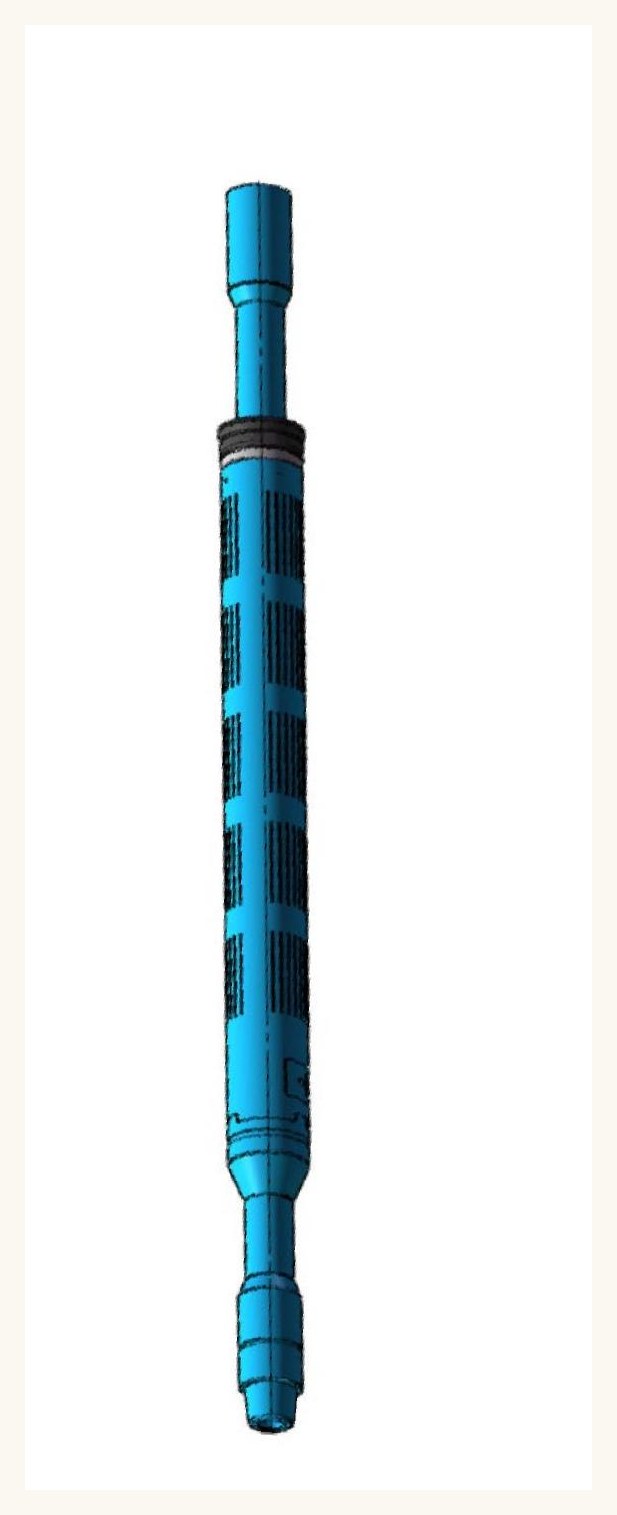
String magnet

String magnet

Magnetic fishing tool for iron scrap generated in drilling, casing repair, and clean-up. Debris sticks to the magnets on the outer pipe and stays in the recovery windows until the tool is pulled. The magnet section stays stationary while the drill string rotates, which reduces casing wear and the chance of dropping metal back into the well. High-temperature magnet available.

Casing ID8.35"–9.12"
Connections4-1/2" IF box × pin
Max. OD / length7.75" / 100"
Magnets120 ea · ≥ 4,000 gauss each
Min. ID / working pressure2.00" / 5,000 psi at 300°F
Temperature0–302°F
Also available7" NC38 · 77.9" long · 72 circular magnets

Negative-pressure vacuum tools

Both tools use the same reverse-circulation idea. Pumping through the nozzle body creates a low-pressure zone at the washover shoe. Fluid travels down the annulus, turns, and comes back up through the shoe, carrying debris with it. Flapper valves hold the solids in the chamber. A screen at the top of the chamber keeps debris out of the string. The chamber can be built from up to 20 joints of pipe.

Use either tool after formation damage, after perforating, or to clean the top of plugs and formation-isolation valves. They work in vertical or horizontal hole and still collect debris when circulation is partly or fully lost, because the solids never have to travel back to surface in the returns.
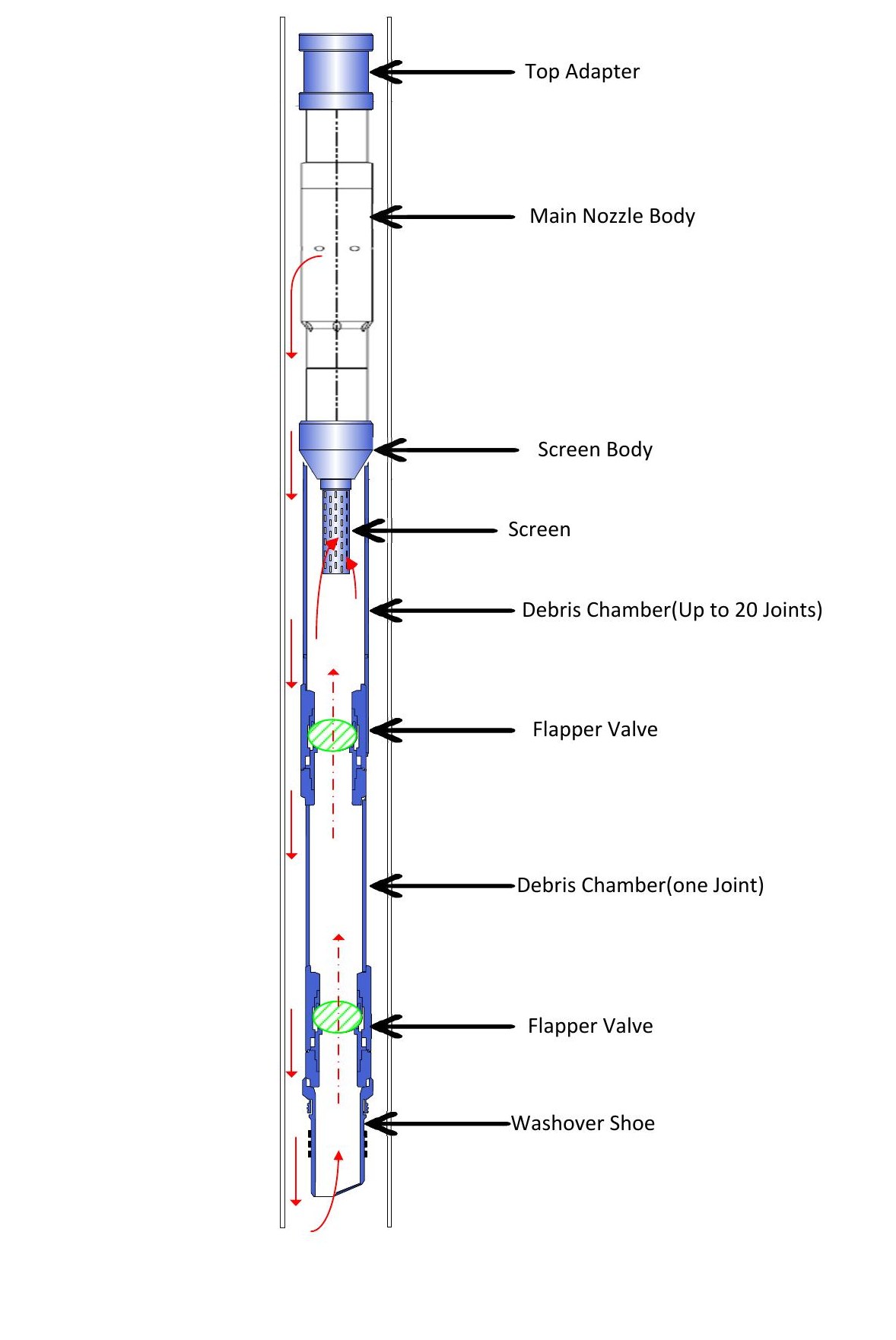
Vacuum tool flow schematic: nozzle, screen, debris chambers, flapper valves, washover shoe

How it flows — both sizes

Fluid leaves the main nozzle body, travels down the annulus, and is drawn back through the washover shoe. Debris lifts through the flappers into the chamber. The same layout is used on the 9-5/8" tool and on the compact 3-5/8" tool; only the body size, connections, and chamber pipe change.
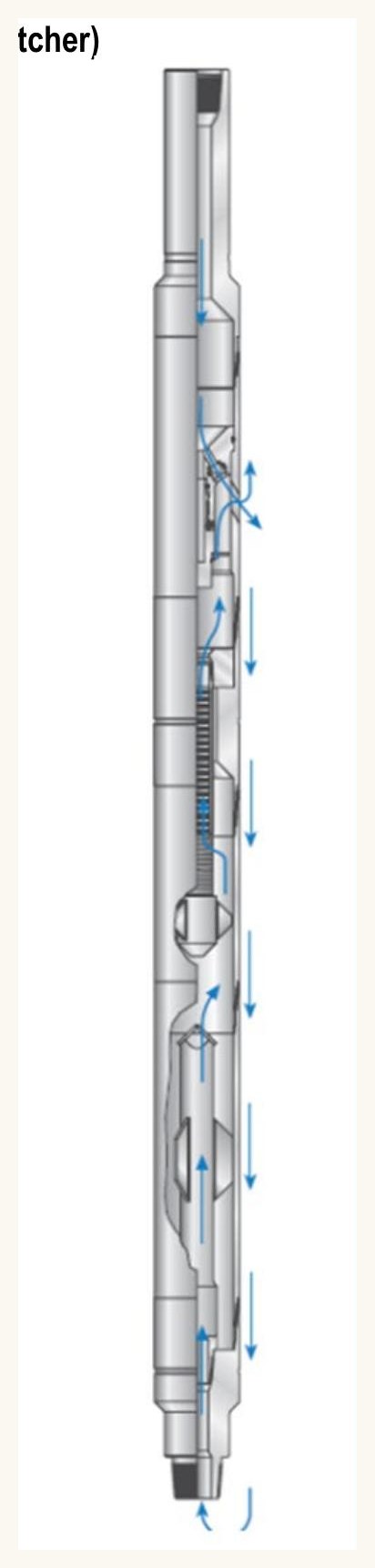
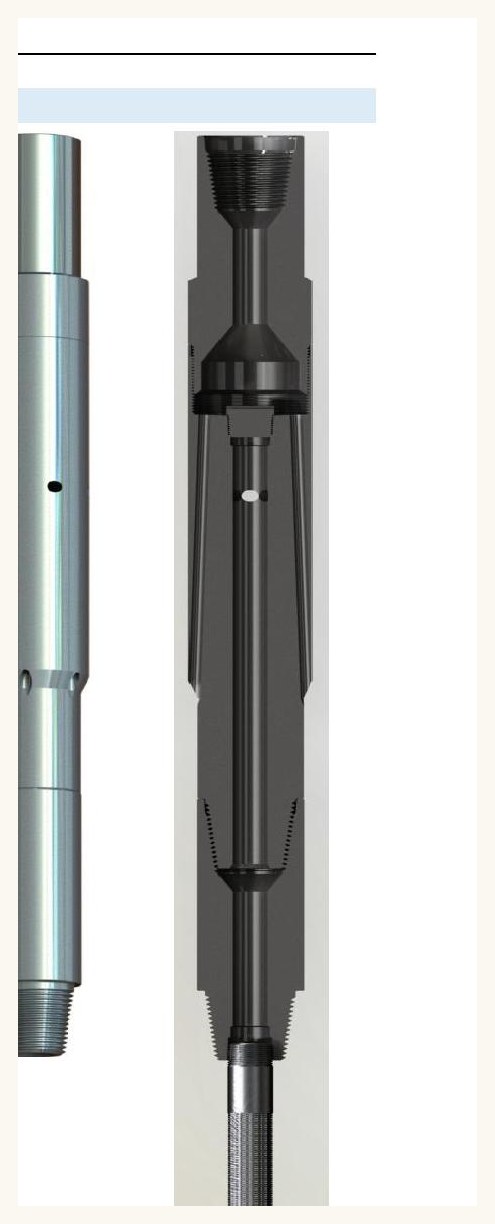
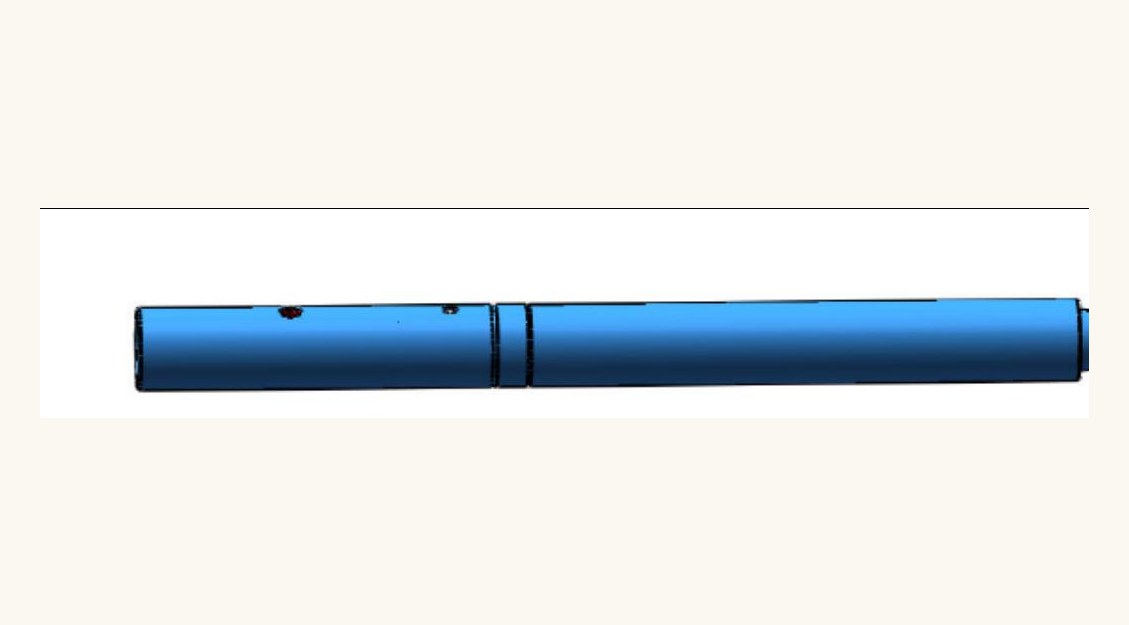
9-5/8 inch negative-pressure vacuum tool cutaway

9-5/8" vacuum tool

Large-bore tool for 9-5/8" casing. 65 ft debris chamber and filter screen as a standard makeup.

Casing9-5/8" 43.50–53.50 ppf
Connections4-1/2" IF box × pin
Max. OD / min. ID7.64" / 2.80"
Overall length73.85 ft
Debris chamber65 ft, 1 mm screen openings
Working / test pressure5,000 psi
External yield10,000 psi
Working temperature120°C
Body material4145H, P110
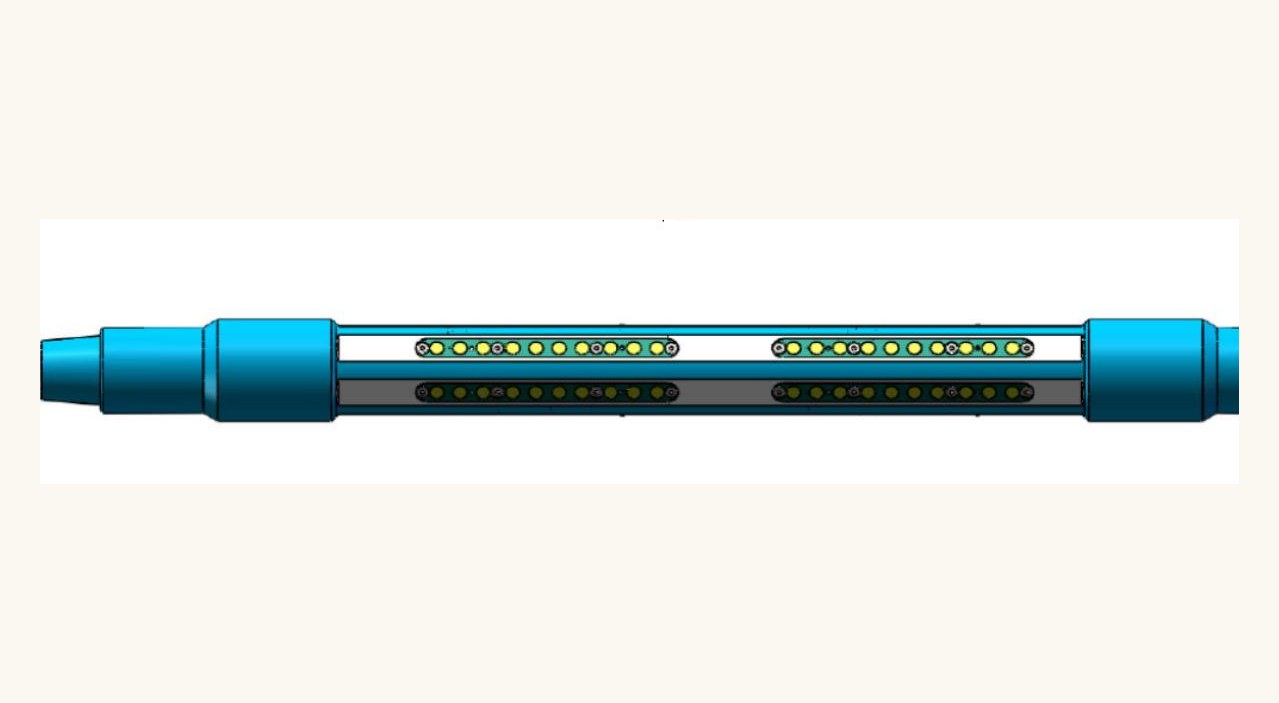
Compact 3-5/8 inch vacuum tool and internal cutaway

3-5/8" vacuum tool

Compact vacuum tool. Same reverse-circulation job as the 9-5/8" unit, in smaller hole. Flow-activated only. Runs vertically or horizontally. 4.5–5 bbl/min is the usual pump rate; 3 bbl is enough to start the effect. Works when circulation is partly or fully lost.

Hole size4-1/2"–7"
Max. tool OD3-5/8"
Length / weight22.5" / 50 lb (40" / 90 lb with adapters)
Top connection2-3/8" API Regular
Lower connection2-3/8" pin (or crossover)
Crossover2-3/8" API Reg box × 2-7/8" EUE pin, 1" line-pipe screen thread
Collection chamberUp to 20 joints, multiple pipe sizes
Optimal flow4.5–5 bbl/min
Make-up / tensile1,800 ft-lb / 180,000 lb
Multi-function circulation tool

Multi-function circulation tool

Raises circulating rate for hole cleaning, and is also used for plugging and workover circulation. Ball-catcher design lets cable or balls pass. Clear open/close status. Rated for high temperature and pressure, extra-deep wells, most mud systems, and H2S service.

  • 6.7" OD × NC50 · 83" long
  • 8.0" OD × 6-5/8" Reg · 97.36" long

BOP jetting sub

Bullnose tool for wellbore, riser, BOP, and wellhead clean-up. Removable nozzles can be swapped when worn, blanked off, or changed in throat size to set jetting flow for the job. Full radial and angular coverage.

Request a BHA

Send casing size, connection, and the debris you expect. We will propose scraper, brush, catcher, magnet, vacuum, and circulation positions on one string.

Request a BHA proposal